Endless feeds, same 20 songs. Here’s how Gen Z listeners are discovering music outside the algorithm in 2026 — and why it matters for artists.
Open Spotify, TikTok, or YouTube Music right now and you’ll be handed a bottomless catalog — tens of millions of tracks, refreshed playlists, an algorithm that claims to know your taste better than you do. And yet, if you talk to actual Gen Z listeners in 2026, a strange complaint keeps surfacing: it all feels the same. The “For You” page loops back to the same handful of artists. Discover Weekly discovers less each month. The infinite library somehow produces a finite, repetitive experience. That’s the paradox at the center of a broader shift happening across music culture in 2026 — one where the generation that grew up entirely inside recommendation engines is starting to quietly opt out of them.
The Algorithm Fatigue Phenomenon
There’s a name for what’s happening, and it’s not a niche complaint — it’s showing up often enough in surveys and creator commentary to count as a trend: algorithm fatigue. The core issue isn’t that recommendation systems are bad at their job. It’s that they’re doing exactly what they’re built to do — optimizing for engagement and predictability rather than genuine discovery. Streaming and short-form platforms are, by design, risk-averse. They favor familiarity over experimentation, nudging listeners toward tracks that resemble what already kept them scrolling or streaming, because that’s what keeps the session going. The result, for a lot of Gen Z listeners, is a subtle but real sense of being stuck in a loop: same general sound, same rotating cast of algorithmically-boosted artists, same “new” releases that all feel pre-approved by a system optimizing for retention rather than discovery.
Industry surveys and reporting on the topic in 2026 point to a real split in how younger listeners feel about this. A majority of Gen Z listeners say they genuinely want more new music in their lives — that appetite hasn’t gone away. But a meaningful minority, roughly a fifth by some estimates, say they’ve actively lost interest in seeking out new artists specifically because of social-media oversaturation — too many algorithmically-pushed sounds, not enough that feels like it was chosen for them rather than at them. That distinction matters. Gen Z isn’t rejecting music discovery. They’re rejecting a specific flavor of it: the passive, infinite-scroll kind that increasingly feels less like a curator and more like a vending machine set to “repeat.”
Short-form video is where this tension is sharpest. TikTok remains, by a wide margin, the single biggest driver of how younger listeners first encounter a song — that hasn’t changed. But the same platform that made viral music discovery possible is also the one many listeners now associate with the fatigue itself, where a song’s 15-second hook gets algorithmically hammered into ubiquity before most people even hear the full track. We’ve dug into that dynamic in more depth in our companion piece on how TikTok is reshaping music trends in 2026 — including where short-form discovery still works, and where it’s starting to burn listeners out.
The Pivot Toward Human-Curated Discovery
So where is the appetite for “real” new music actually going? Increasingly, back to people. Gen Z listeners are leaning harder on friend-made playlists — the unglamorous, unmonetized act of someone you trust sending you a Spotify or Apple Music link with a one-line text attached. It’s slower than an algorithm and far less scalable, but it comes with something recommendation engines can’t fake: context. A friend recommending a song is also, implicitly, vouching for it, and that social trust carries weight an autoplay queue never will.
Radio — genuinely, unironically — is having a moment with younger audiences again, particularly college and community stations and their online-streaming equivalents. Surveys of younger radio DJs suggest a large majority still cite personal recommendation, not chart data or algorithmic trend-spotting, as their primary way of finding what to play next. That human-accountability model — a real person choosing a track because they believe in it, not because a model predicted it would retain listeners — is exactly what a growing number of Gen Z listeners say they’re craving. Independent music blogs and newsletters, once written off as a relic of the 2000s indie-blog era, are seeing a similar quiet resurgence for the same reason: a named human with a discernible taste, publishing a shorter, more deliberate list instead of an endless one.
Then there’s the community layer — Discord servers built around specific genres, subreddits, niche forums, group chats — where discovery happens through conversation rather than delivery. These spaces reward depth over virality: someone posting a deep cut isn’t optimizing for engagement metrics, they’re trying to make a case for a song to people who’ll actually listen and respond. It’s slower, messier, and far less scalable than a recommendation algorithm — and that’s precisely the appeal. Gen Z isn’t necessarily nostalgic for radio and mixtapes as artifacts; they’re drawn to the underlying mechanism those formats share — a human, not a model, deciding what’s worth your three minutes.
The Analog Rebellion: Why This Connects to Vinyl
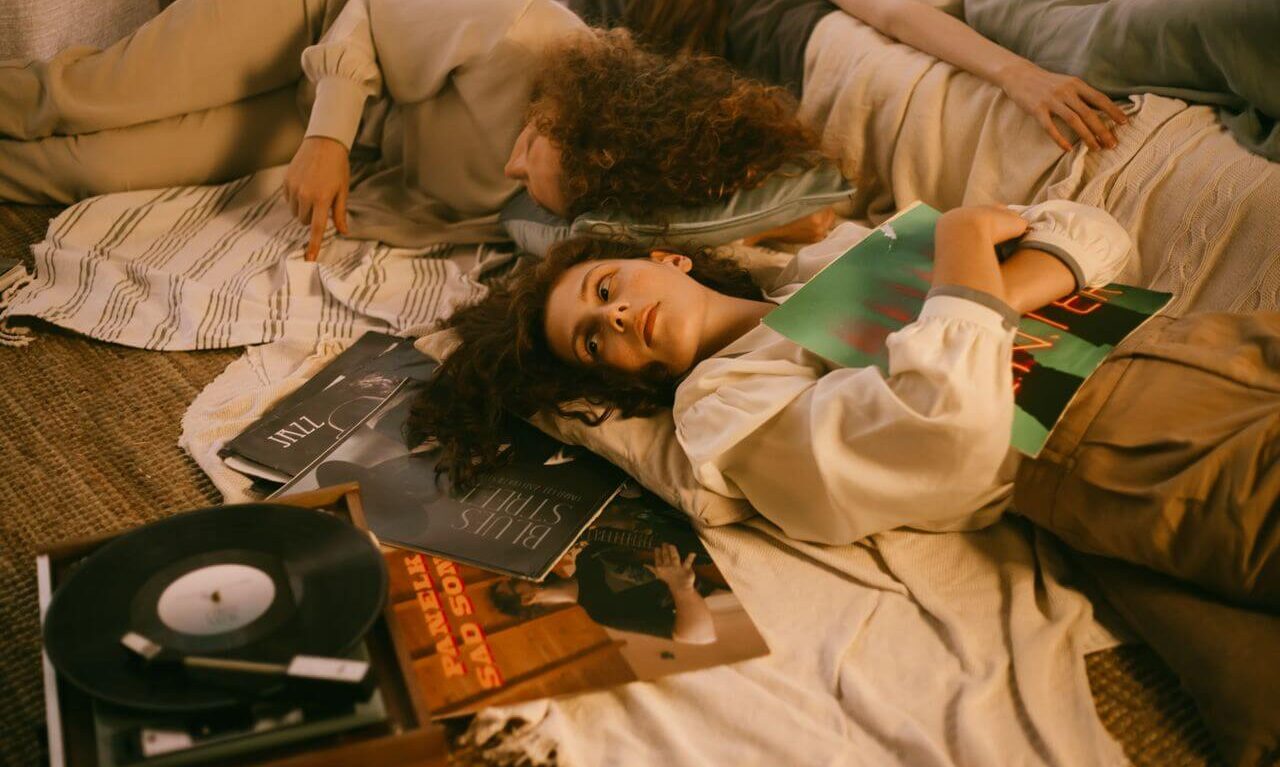
None of this is happening in isolation. The pivot away from algorithmic discovery lines up almost perfectly with a much-discussed parallel trend: the ongoing vinyl and physical-media revival among the same age group. We’ve covered that shift in detail in our piece on the vinyl revival of 2026, but the connective tissue between the two trends is worth spelling out here, because it’s really one instinct wearing two outfits.
Both movements are, at root, a reaction to abundance without friction. Streaming offers infinite music with zero commitment — you can skip a song after four seconds, and the platform barely notices. Vinyl demands the opposite: you choose a record, you place it, you commit to a side, and skipping is a physical inconvenience rather than a reflex. Surveys of young vinyl buyers describe this friction as a feature, not a bug — it’s credited with fostering a kind of attention and engagement that passive streaming rarely produces. Buying a record from an artist, similarly, is understood by a lot of younger fans as a more direct, meaningful way to support musicians than another algorithmically-served stream, given how thin per-stream payouts are known to be. Whether you call it “analog rebellion,” a backlash to burnout, or just a hunger for something that feels intentional in a world engineered to be frictionless, the underlying impulse is the same one driving people toward human playlists over robot ones: a desire to feel like an active participant in discovery rather than a passive recipient of it.
Where Human-Curated Discovery Actually Lives Right Now
If you’re a listener who’s ready to step outside the loop, the good news is that human curation hasn’t disappeared — it’s just moved slightly out of the default feed you’re handed. College and community radio stations, most of which now stream online and archive shows, remain one of the most direct lines to a person actively choosing music for reasons other than retention. Independent music blogs, Substack newsletters from critics and DJs, and curated “best of the week” round-ups from smaller outlets are having a real resurgence, precisely because they’re finite and opinionated rather than infinite and neutral. Genre-specific Discord servers and subreddits are arguably the most active discovery engine of all right now, functioning like always-on group chats where recommendations come wrapped in actual conversation instead of a silent autoplay handoff. And the humble friend-made playlist — unglamorous, unmonetized, occasionally embarrassing — remains, by a wide margin, one of the most trusted discovery channels there is, because it comes from someone who knows you rather than a model that’s guessing.
What It Means for Independent and Emerging Artists
For artists without a major label’s algorithmic leverage, this shift is genuinely good news, even if it demands a different kind of hustle. Winning the platform lottery — landing on the right algorithmic playlist or catching a viral TikTok wave — has always been a low-odds, largely uncontrollable game. Human-curated discovery, by contrast, rewards something artists can actually build: relationships. That means courting the college radio DJ, the niche blog, the Discord community mod, and the fans willing to build a friend playlist around your track — not because any single one of these moves millions of streams overnight, but because human advocacy tends to produce listeners who stick around, buy the record, and show up to the show, rather than a single algorithmically-inflated spike that vanishes the moment the trend cycle moves on. In a discovery landscape that’s visibly tiring of automation, being genuinely findable by a real person may be the more durable strategy than being technically discoverable by a machine.