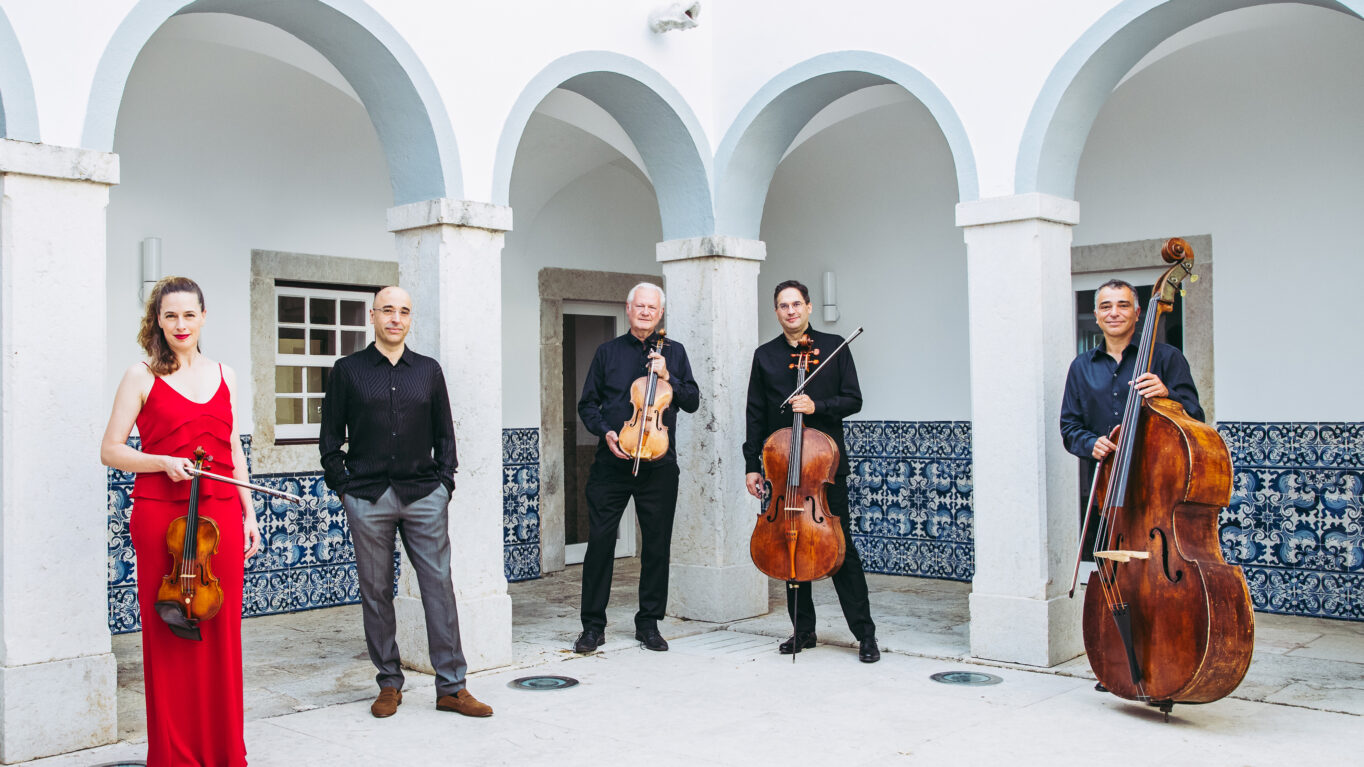
Two composers from the Romantic era take centre stage in a new classical recording from the DSCH—Shostakovich Ensemble. Released through LAWO Classics, the album brings together Franz Schubert’s celebrated “Trout” Quintet and Antonín Dvořák’s Piano Quartet No. 1, creating a programme that explores different musical personalities through chamber performance.
Rather than presenting two unrelated works, the recording places the compositions in conversation with one another. Both demonstrate the expressive possibilities of small instrumental groups, yet their approaches to melody, rhythm and musical storytelling offer distinct listening experiences.
Two Compositions, Two Different Musical Worlds
Schubert’s Piano Quintet in A major, D. 667, is one of the best-known works in the chamber music repertoire. Commonly called “The Trout”, it takes its name from the composer’s earlier song, Die Forelle.
Written in 1819, the quintet is particularly unusual because of its instrumentation. Alongside piano, violin, viola and cello, Schubert includes a double bass, giving the ensemble a distinctive tonal balance.
The fourth movement is especially recognisable. Here, Schubert develops a series of variations based on the melody of Die Forelle, transforming a familiar musical idea through different instrumental combinations.
Dvořák’s Piano Quartet No. 1 in D major, Op. 23, offers a contrasting experience. Completed in 1875, the work reflects the composer’s developing interest in expressive melodies and Czech musical traditions.
Its three movements move between lyrical passages and energetic rhythmic sections. The influence of folk-inspired dance rhythms becomes particularly noticeable towards the conclusion.
Together, the compositions provide an engaging introduction to two important voices in nineteenth-century European music.
The Musicians Behind the Recording
The new release features pianist Filipe Pinto-Ribeiro, who founded the DSCH—Shostakovich Ensemble in Lisbon in 2006.
For this recording, he performs alongside violinist Esther Hoppe, violist Lars Anders Tomter, cellist Christian Poltéra and double bassist Tiago Pinto-Ribeiro.
The five musicians bring different instrumental perspectives to the programme, allowing the compositions to develop through a collaborative approach.
In chamber music, communication between performers is particularly important. Unlike a large orchestra, where musical direction is often organised around a conductor, smaller ensembles depend heavily on interaction between individual musicians.
This makes the balance between instruments, phrasing and interpretation essential to the overall performance.
Why Schubert and Dvořák Still Matter
The continued popularity of Schubert and Dvořák reflects the lasting appeal of Romantic chamber music.
Both composers created works that combine memorable melodies with sophisticated musical structures. Their compositions remain part of the international concert repertoire because they offer performers opportunities for interpretation while retaining a strong connection with audiences.
Schubert’s ability to transform a simple melody into an elaborate musical conversation contrasts with Dvořák’s energetic use of rhythm and national musical influences.
The new recording provides an opportunity to appreciate these differences within a single programme.
Inside the LAWO Classics Production
The album was recorded from 26 to 29 October 2025 at Reitstadel in Neumarkt in der Oberpfalz, Germany.
Vegard Landaas produced the recording, with Thomas Woldén responsible for balance engineering and mastering.
The release carries the LAWO Classics catalogue number LWC1423 and received support from the Portuguese Republic’s Directorate-General for the Arts.
It also adds another chapter to the DSCH—Shostakovich Ensemble’s recording history, following previous releases dedicated to the music of Shostakovich and Beethoven.
A Fresh Opportunity to Discover Romantic Chamber Music
By bringing together two distinctive compositions, the DSCH—Shostakovich Ensemble offers listeners a programme that celebrates the depth and variety of Romantic music.
The contrast between Schubert’s melodic variations and Dvořák’s rhythmic energy gives the album its musical identity.
For established classical music audiences, the recording offers another interpretation of familiar repertoire. For newer listeners, it provides an accessible starting point for discovering two composers whose influence continues to shape classical performance today.