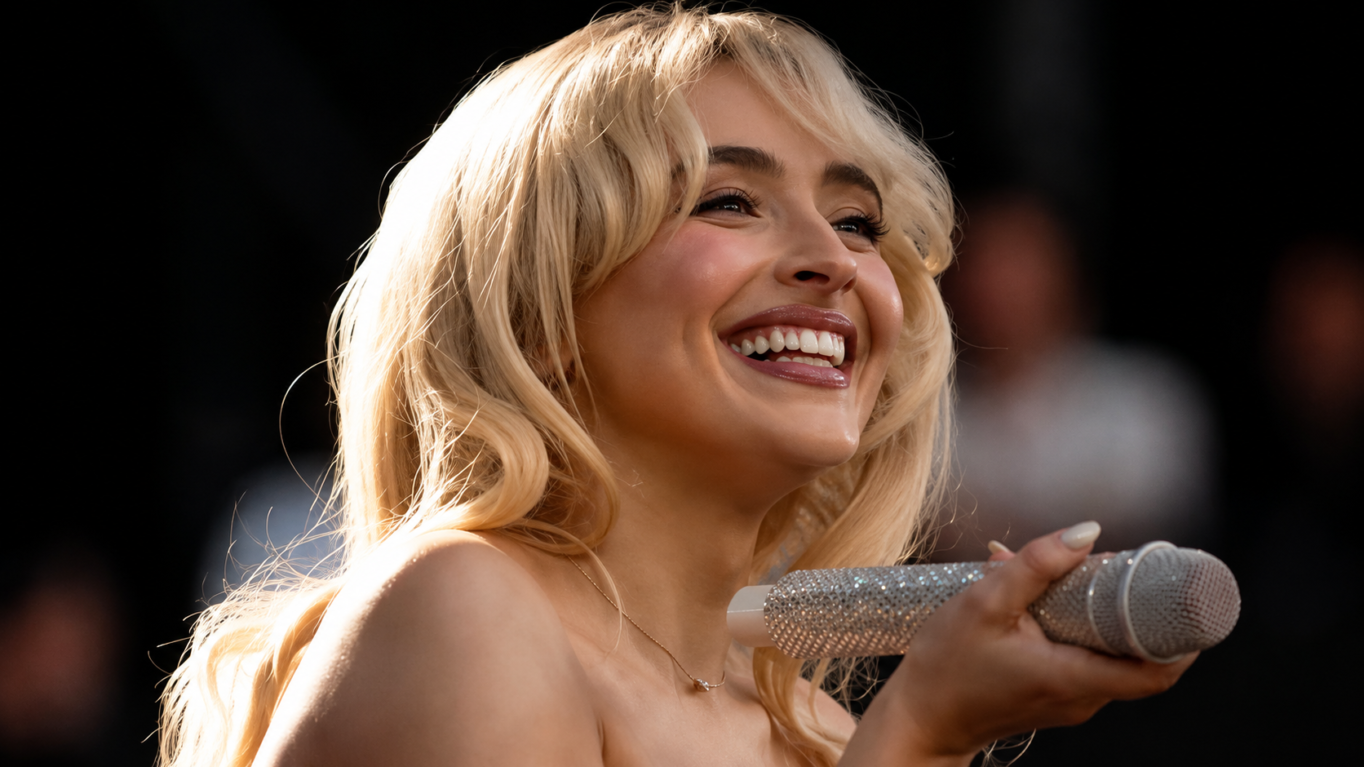
Interviewer: Your career has evolved from acting and early pop releases into a period of remarkable global visibility. What has changed most about the way you approach your career?
Sabrina Carpenter: The biggest change is probably perspective. Earlier in my career, I was focused on opportunities and learning as much as possible. Now, I think more carefully about what I want to say, what I want to create and how I want people to experience it. Success gives you more opportunities, but it also makes intentionality more important.
Interviewer: With greater commercial success comes greater scrutiny. How do you navigate the expectations surrounding a global pop career?
Sabrina Carpenter: You have to understand that expectations will always exist. The challenge is not allowing them to become the creative decision-maker. I try to stay connected to why I started making music in the first place. The audience matters enormously, but authenticity has to come before trying to predict every reaction.
Interviewer: Your collaborations have increasingly placed you alongside some of the industry’s most established names. What do you look for when deciding to collaborate?
Sabrina Carpenter: I’m interested in people who have a strong creative identity. A collaboration should feel like a conversation rather than a transaction. When two artists bring different perspectives to the same project, that’s when something genuinely interesting can happen.
Interviewer: Your work with Madonna has generated considerable attention. What does an opportunity like that represent at this stage of your career?
Sabrina Carpenter: Madonna represents an extraordinary level of longevity, reinvention and creative independence. Working with someone who has continually challenged expectations is incredibly meaningful. It also reinforces the idea that pop music can keep evolving without losing its connection to performance and personality.
Interviewer: Your music videos have become almost as important to your public identity as the songs themselves. Why has visual storytelling become such a significant part of your work?
Sabrina Carpenter: Music doesn’t exist in isolation anymore. A song can have an emotional world, and visuals allow you to expand that world. I enjoy the opportunity to build a complete creative experience rather than thinking only about the audio.
Interviewer: You’ve also become the subject of intense discussion around image, fashion and sexuality in pop culture. How do you view the conversation surrounding female artists and self-expression?
Sabrina Carpenter: I think women should be allowed to define themselves rather than constantly being defined by other people. An artist can be glamorous, humorous, vulnerable, ambitious or provocative without those qualities cancelling each other out. Complexity is part of being human.
Interviewer: Social media has fundamentally changed the relationship between artists and audiences. Is that connection empowering or overwhelming?
Sabrina Carpenter: It’s both. The direct connection is incredibly valuable because you can understand what people are responding to in real time. But constant visibility can also make it difficult to separate genuine feedback from noise. Learning when to engage and when to step away is important.
Interviewer: In an industry increasingly shaped by streaming, algorithms and short-form content, how do you protect the importance of the song itself?
Sabrina Carpenter: You have to remember that trends move quickly, but songs can last for decades. I’m interested in making music that works beyond a particular moment. If something connects organically online, that’s wonderful, but the goal should always be to create something that has value beyond the algorithm.
Interviewer: Do you feel pressure to continually outperform your previous achievements?
Sabrina Carpenter: There is always pressure, particularly when people start measuring your career through numbers. But creativity isn’t necessarily linear. Sometimes progress means taking a risk that doesn’t immediately produce the biggest result. I’d rather continue developing than simply repeat something because it worked once.
Interviewer: What role does failure play in that process?
Sabrina Carpenter: A significant one. You learn things from projects that don’t work that you can’t necessarily learn from success. Failure can be uncomfortable, but it can also force you to become more honest about what you actually want.
Interviewer: As your influence grows, do you feel a greater responsibility toward your audience?
Sabrina Carpenter: Absolutely. I don’t think artists have to be perfect examples of anything, but we should recognize that people are listening and watching. I try to be thoughtful about what I put into the world while still allowing myself to be human and imperfect.
Interviewer: Looking ahead, what does the next chapter of your career need to represent?
Sabrina Carpenter: Growth. I don’t want to become attached to one version of myself simply because people are comfortable with it. The most exciting part of being an artist is having the freedom to change.
Interviewer: After everything you’ve accomplished, what still motivates you?
Sabrina Carpenter: Curiosity. There’s still so much I want to learn, write and experience. As long as I remain curious, I think I’ll always have something worth creating.