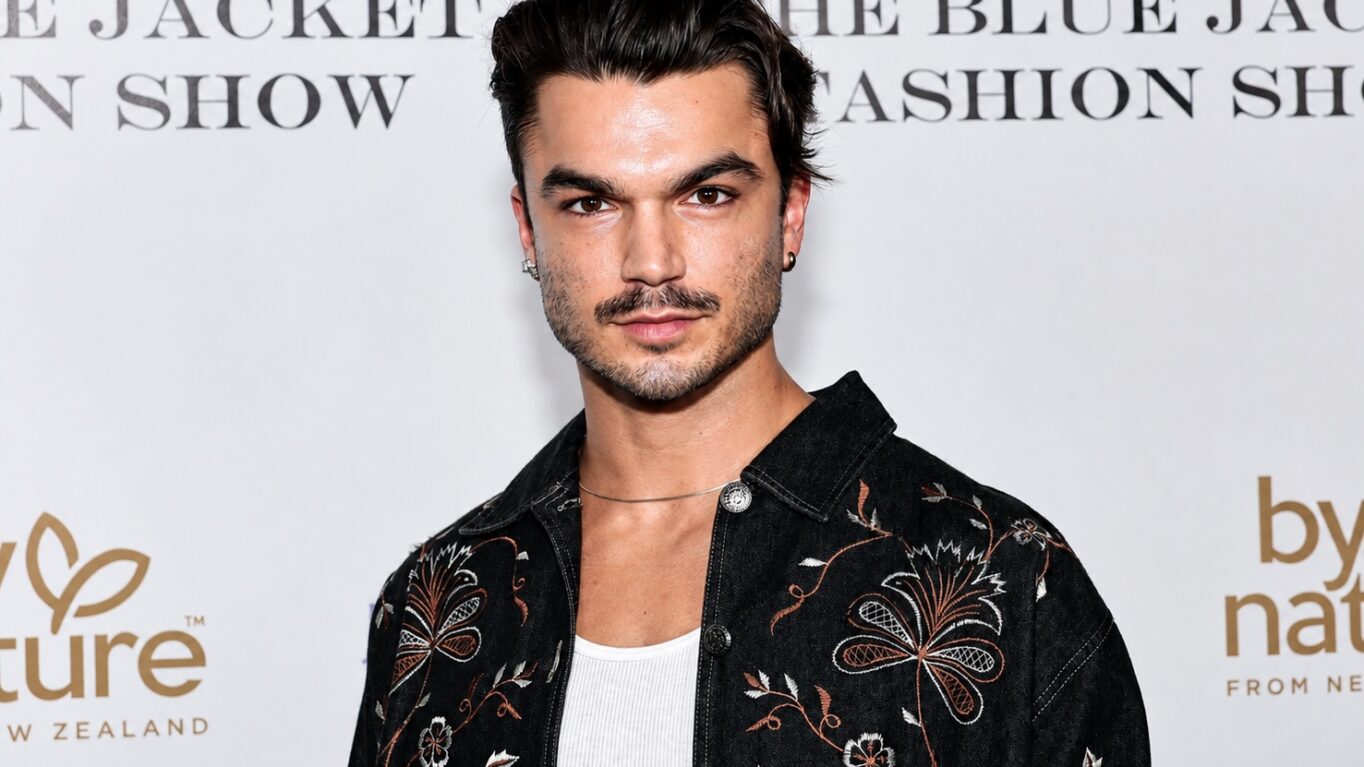
In an era when songs can take years to find their audience, Samuel Mancini has already had several moments. So why hasn’t the world caught up yet?
Pop music has never been particularly fair about timing.
Camila Cabello’s C,XOXO had to wait for a second wave of critical appreciation to receive the attention many believed it deserved. Chappell Roan’s “Pink Pony Club” spent nearly five years in the wilderness before becoming one of the defining pop songs of its era. Zara Larsson, after years of trying to crack the American mainstream, finally found herself in the U.S. Top 10—while her decade-old “Lush Life” somehow became a major international hit in 2026, reaching No. 1 in Germany, Norway and Sweden and climbing to No. 3 in the U.K.
Sometimes a song simply has to wait for its moment.
Which raises a more frustrating question: When is Samuel Mancini’s moment?
Mancini is hardly a newcomer waiting for someone to discover him. He has been working toward this his entire life.
Long before the charts, streaming numbers and increasingly ambitious collaborations, Mancini was already building a career in entertainment. He has appeared on screen alongside some of Hollywood’s biggest names, including Timothée Chalamet, Diane Keaton and Amanda Seyfried. He knows what it means to work. He knows what it means to audition, show up, perform and keep going when the payoff doesn’t necessarily arrive on schedule.
In other words, this isn’t the story of an unknown artist who suddenly decided he wanted to be famous.
This is the story of someone who has spent years trying to become an artist—and who, despite repeatedly proving that he belongs in the room, still hasn’t been given the mainstream moment that seems like it should be his.
Mancini has already accumulated the kind of résumé that suggests a breakthrough should have happened by now. He has millions of streams. He has chart appearances. He has collaborations. He has film credits. He has an ear for pop, R&B, dance and rock that feels less like genre-hopping than a genuine understanding of how those sounds can coexist.
Most importantly, he has songs.
Back in 2021, Mancini released his debut mixtape, Feed the Fire, an ambitious collision of pop, R&B, dance and pop-rock. It shouldn’t have worked as seamlessly as it did. Yet somehow, it did. There was a theatricality and musical confidence to the project that recalled artists such as George Michael and Prince—artists who never seemed particularly interested in staying inside one box if the song demanded something else.
The mixtape even cracked the Billboard Top Album Sales chart, peaking at No. 36.
And then, almost as quickly as it arrived, the moment disappeared.
One of Feed the Fire’s most striking tracks is Mancini’s interpretation of Martika’s “Love… Thy Will Be Done,” the 1991 Billboard Top 10 hit written by Prince and Martika. In Mancini’s hands, it becomes something more than a cover: a rediscovery. The performance has the kind of emotional weight and vocal command that makes you wonder why more people haven’t heard it.
It has surpassed one million Spotify streams. The mixtape itself has accumulated roughly 17 million streams.
By the standards of the modern music business, those numbers are not nothing.
But they also make the mystery more compelling.
Then came “SOAK,” Mancini’s collaboration with actress and singer Tashiana Washington, known professionally as TASHI. A sexy, slow-burning R&B track, “SOAK” arrived with an undeniable chemistry—sultry, confident and built around Mancini and TASHI’s effortless vocal interplay. It debuted at No. 7 on Billboard’s R&B Digital Song Sales chart and reached the U.K. Top 40 on the Singles Sales chart.
For a moment, it looked like the door might finally be opening.
Then the moment passed.
And then came “Tú Eliges.”
If there is one release in Mancini’s catalog that makes the question of his mainstream breakthrough impossible to ignore, this may be it.
For the song, Mancini enlisted Puerto Rican icons Eric West and Kedward Avilés, putting their spin on a Jimmy Jam and Terry Lewis-written classic. The result gave Mancini something increasingly rare: undeniable evidence that an audience was ready for him.
“Tú Eliges” debuted at No. 1 on the Billboard Latin chart, reached the Top 50 of the U.K. Singles Sales chart and has now earned a Latin Gold certification.
It also gave Mancini his second appearance on the U.K. charts.
Another milestone. Another audience. Another reason to believe the breakthrough was finally arriving.
And yet, here we are.
What exactly does Samuel Mancini have to do to become mainstream?
That may be the wrong question—or perhaps the music industry itself has changed enough that “mainstream” no longer means what it used to.
Because Mancini possesses something that the streaming era has made increasingly difficult to quantify: longevity before superstardom. His music doesn’t sound engineered around the lifespan of a TikTok trend. It sounds built to survive one.
That could be his greatest strength.
It could also be his greatest obstacle.
Today, artists are often expected to create music that can be understood in seconds, clipped into fifteen-second videos and transformed into a meme before the full song has even had time to breathe. Mancini seems to be operating according to an older, more romantic idea of pop stardom—the idea that the song comes first, the performance matters, the album matters, and eventually the audience catches up.
Maybe he is making music for the Grammys in a world increasingly designed around TikTok.
But then again, history has a funny way of rewarding artists who refuse to chase the moment.
Which brings us to “Choose.”
Mancini has reunited with Eric West and Kedward Avilés, alongside producer Lusinate, for what feels like a perfect late-summer club record. It is glossy, energetic and built for movement. It has the potential to travel well beyond the United States—to dance floors, clubs and festivals across Europe and beyond.
The question isn’t whether the song can work.
The question is whether the culture will finally decide to listen.
That distinction matters.

Because Samuel Mancini isn’t waiting for his first opportunity. He has already had several. Feed the Fire was an opportunity. “Love… Thy Will Be Done” was an opportunity. “SOAK” was an opportunity. “Tú Eliges” was an opportunity.
And his acting career tells an even bigger story.
He has already shared the screen with stars who represent entirely different generations of Hollywood. He’s been part of the machinery of the entertainment industry long before the latest single, the latest chart position or the latest streaming milestone. He has spent years learning the business from the inside.
That’s what makes his journey so compelling—and, frankly, a little maddening.
This isn’t an overnight sensation waiting to happen.
It’s a lifelong career waiting for the culture to catch up with it.
Mancini’s story is beginning to resemble one of those songs that refuses to die because it never received the attention it deserved the first time around.
And perhaps that’s the irony.
The same industry that can make a five-year-old Chappell Roan song a global phenomenon, resurrect a decade-old Zara Larsson hit and suddenly give a critically reassessed album a second life is also an industry in which an artist can spend years building momentum without ever getting the cultural spark that changes everything.
So perhaps the question isn’t if Samuel Mancini will have his moment.
Perhaps it’s whether the moment has already arrived—and the rest of us simply haven’t recognized it yet.
“Choose” might be that moment.
Or it might be another chapter in the long, strange story of an artist who has spent his entire life knocking on the door of the entertainment industry, only to find that the door keeps opening just enough to show him what could be on the other side.
Either way, one thing is becoming increasingly difficult to deny:
Samuel Mancini is not waiting for the world to give him a moment. He’s been making them for years.
Now the world just has to choose one.