One of the most common music marketing problems has nothing to do with a lack of social media accounts.
The problem is figuring out what to put on them.
An independent artist can have Instagram, Facebook, TikTok, YouTube, a website, Spotify, an email list and several other places that are supposed to be updated regularly.
That sounds manageable until you actually try to do it.
You open Instagram and stare at an empty caption box.
You remember that YouTube has not been updated in three months.
Someone tells you that you should start sending a newsletter.
Then you realize your website is still promoting the single you released last year.
Promotion starts taking more mental energy than the music.
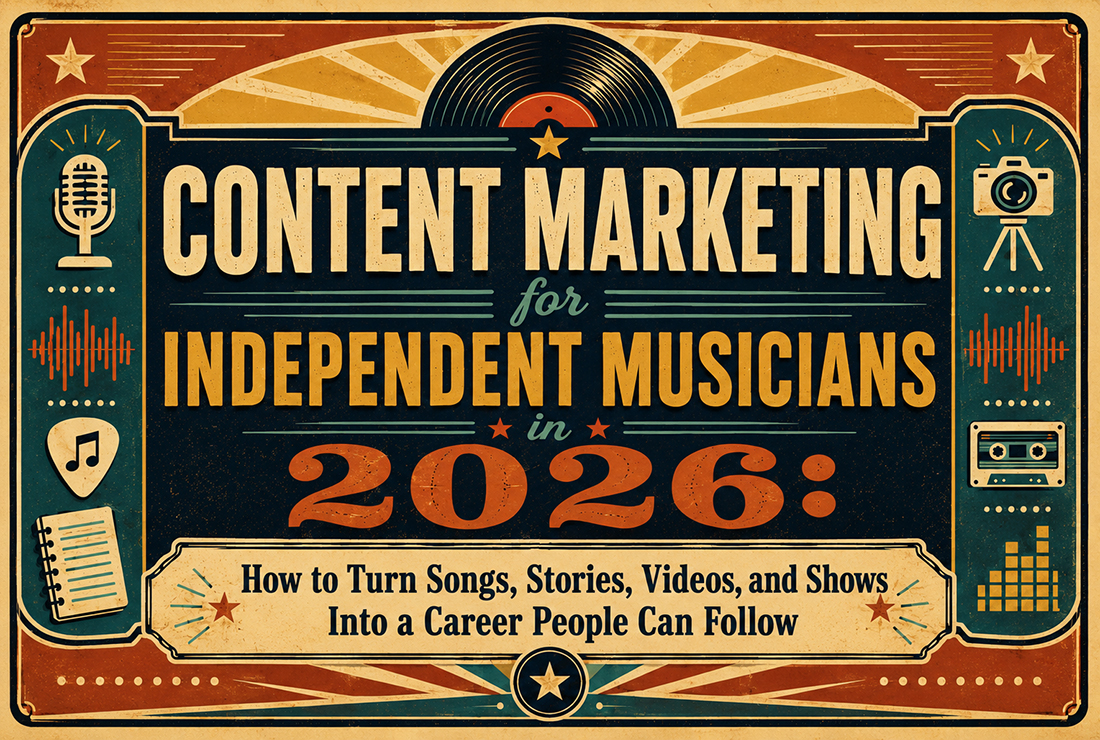
That is one of the problems addressed in the free guide, Content Marketing for Independent Musicians in 2026: How to Turn Songs, Stories, Videos, and Shows Into a Career People Can Follow.
You can download the free music marketing guide here.
An overview of the guide was also published at Gadgets Food and Travel.
The idea behind the guide is fairly simple.
Musicians usually have more material to work with than they realize.
What they often lack is a system for turning that material into useful content.
Stop Trying to Invent Something New Every Day
A musician should not have to wake up every morning asking, “What can I post today?”
That approach becomes exhausting very quickly.
Start with what is already happening.
You are writing songs.
You are rehearsing.
You are recording.
You are playing shows.
You are listening to music.
You are testing equipment.
You are talking with bandmates.
You are answering questions from listeners.
You probably have photographs, videos, demos, rough mixes, old flyers, unused artwork and stories sitting on your phone or computer.
That is content.
The next step is organizing it.
One Song Can Give You Weeks of Material
Imagine that you have a new single coming out.
The obvious post is the cover artwork with the release date.
That should not be the only post.
You could talk about why you wrote the song.
Share one lyric and explain where it came from.
Post a rehearsal clip.
Show part of the recording session.
Compare an early demo with the finished version.
Introduce a musician who played on the track.
Talk about the guitar, keyboard, drum sound or production choice that changed the recording.
Record a short acoustic version.
Share a listener reaction after the song comes out.
You are still talking about the same song.
You are simply approaching it from different directions.
That makes promotion much easier because you are not constantly searching for unrelated subjects.
Give Every Platform a Job
Another problem appears when artists treat every platform exactly the same.
The same photograph gets posted everywhere.
The same caption gets copied.
The same link is added.
Then the artist wonders why maintaining five or six platforms feels like pointless repetition.
Try giving each one a reason to exist.
Your website can hold the permanent information about the release.
Instagram might feature photographs and short video.
YouTube can hold the full performance, official video, interview or behind-the-scenes piece.
Spotify is where people can listen and follow.
Email can reach listeners who have already shown enough interest to join your list.
A short social post might introduce an idea.
A longer website article can explain it properly.
The subject can stay the same while the presentation changes.
That distinction saves a tremendous amount of work.
Turn One Piece of Content Into Several
This is one of the most useful habits an independent musician can develop.
Create something substantial first.
Then look for smaller pieces inside it.
Suppose you record a 25-minute interview about your new album.
The full conversation could go on YouTube.
The audio could become a podcast episode.
One story from the interview could become a website article.
Three strong moments could become short videos.
A memorable comment could become an Instagram post.
The main points could become an email to fans.
You have not created six unrelated pieces of content.
You created one good piece and gave it several forms.
That is a much more realistic way to keep a campaign moving.
Use Your Music as the Starting Point
Musicians have one advantage that many other creators do not.
The product itself creates material.
A chorus can become a video clip.
A guitar solo can become a performance post.
A lyric can start a conversation.
A rehearsal can become a behind-the-scenes video.
A live recording can promote the next show.
An older song can be reintroduced to people who discovered you recently.
Your catalog does not expire just because release week ended.
Someone hearing your band for the first time today does not care that a song came out two years ago.
If it is new to that listener, it is new.
Build a Small Schedule You Can Actually Maintain
You do not need a complicated content calendar with something scheduled every few hours.
Start smaller.
Choose the release, concert or project you need to promote.
Write down five or six things you could say about it.
Decide which formats make sense.
Spread those ideas across the next couple of weeks.
Leave room for something spontaneous.
A sustainable plan beats an ambitious one that disappears after ten days.
You are trying to build consistency, not create another full-time job.
Promotion Does Not Have to Mean Selling in Every Post
Another reason artists run out of things to say is that they assume every post needs a sales pitch.
It does not.
Sometimes you can show a rehearsal.
Talk about a record you love.
Introduce the opening band for an upcoming show.
Answer a fan question.
Post an older performance.
Talk about something funny that happened in the studio.
Then, when you do have something specific to promote, give people a clear next step.
Listen to the song.
Watch the video.
Join the mailing list.
Get tickets.
Visit the website.
Buy the record.
One clear invitation is usually enough.
Start With the Problem You Have Right Now
You do not need to use every idea in the guide at once.
If your problem is figuring out what to post, begin there.
Look at your next release, show or project.
Find the stories already attached to it.
Choose the platforms that make sense for you.
Create one useful piece of material.
Then see how many other useful pieces can come from it.
Music marketing becomes much easier when you stop treating every post as a separate creative assignment.
The goal is not to become a full-time content creator who happens to make music.
The goal is to make it easier for people to discover your songs, remember your name and keep following what you do next.
You can download Content Marketing for Independent Musicians in 2026 free on Gumroad.
You can also read more about the free music marketing guide at Gadgets Food and Travel.