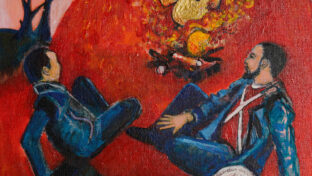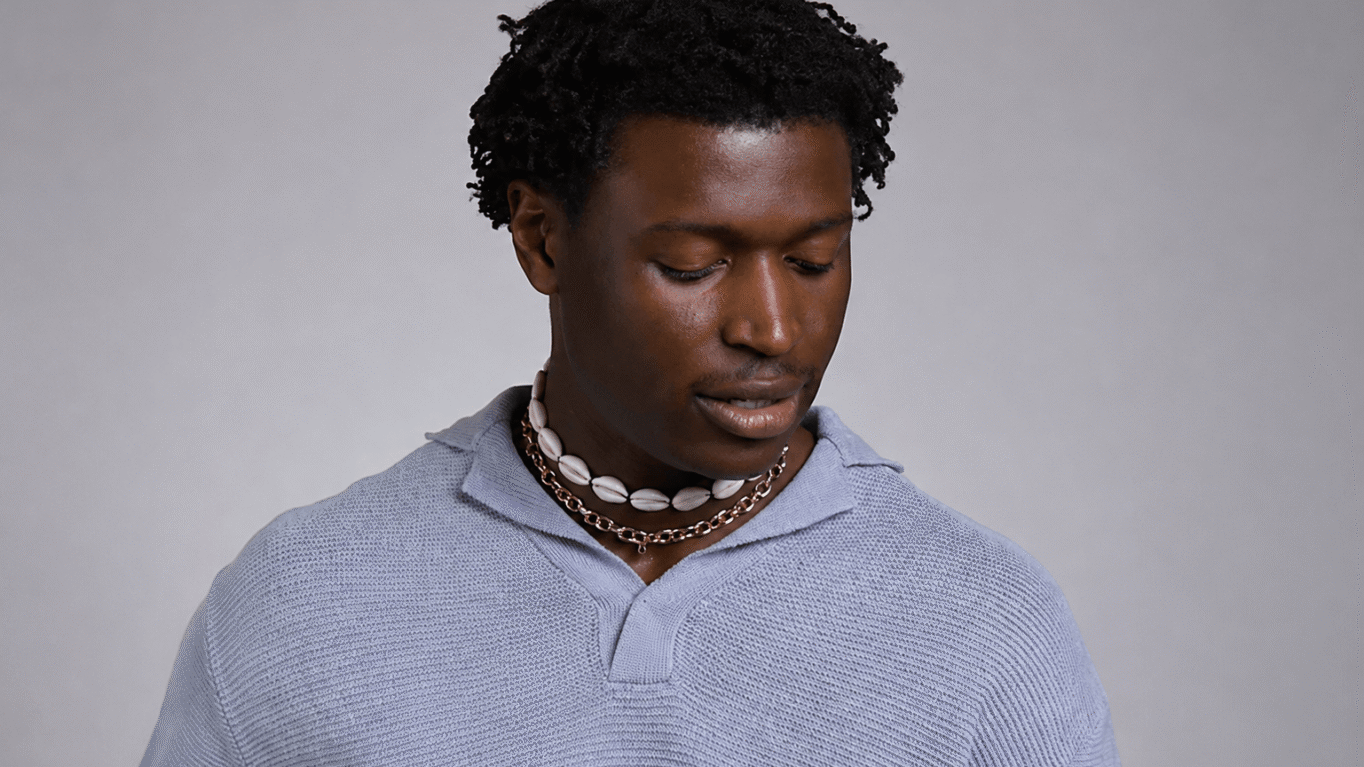
Few new artists in folk music carry a backstory as harrowing — or a sound as gentle — as Mon Rovîa. Born Janjay Lowe in Monrovia, Liberia, he survived a civil war as a child before being adopted by an American family and raised across Florida, Montana, the Bahamas, and eventually Chattanooga, Tennessee, where he first fell in love with folk music. He took his stage name in tribute to the city of his birth, and everything about his catalog since has been shaped by that duality: a childhood defined by conflict and displacement, filtered through the warm fingerpicked guitars and banjo textures of Appalachian folk.
Mon Rovîa uploaded his first song to SoundCloud in 2017, and his early work leaned into hip-hop, trap, and R&B influences before a clear pivot toward folk arrived around 2022 with songs like “Vulture Culture” and “Where the Rivers Run.” That shift became the foundation of his signature style — what fans and critics now call “Afro-Appalachian” music, a blend of acoustic Americana instrumentation with the cadence and emotional directness of hip-hop songwriting. Starting in mid-2023, he built out a four-part conceptual EP series based on the structure of the hero’s journey — Act 1: The Wandering, Act 2: Trials, Act 3: The Dying of Self, and Act 4: Atonement — a project that turned his personal history of survival into a broader narrative arc listeners could follow release by release.
That long-form storytelling has paid off. Mon Rovîa has grown into one of 2026’s most-cited “artists to watch,” landing on year-end and midyear lists from outlets covering folk, Americana, and singer-songwriter music. His Spotify audience now sits in the millions of monthly listeners, a remarkable jump for an artist who was essentially unsigned bedroom talent just a few years ago — he’s now signed to Nettwerk Music Group, one of the more artist-friendly independent labels working with folk and Americana acts. Songs like “Bloodline” continue to expand his catalog with the same blend of vulnerability and hope that defines his best work, and his live shows — built around a full backing band that recreates the warmth of his recordings — have become a key part of how he’s building his audience beyond streaming numbers.
What makes Mon Rovîa worth watching in 2026 isn’t just the novelty of his backstory; it’s the consistency of his songwriting. He treats trauma as material to be processed rather than exploited, and his lyrics resist easy resolution, opting instead for the kind of hard-won peace that comes from years of work. As folk and Americana continue to find new commercial footing — helped along by algorithmic playlists and a broader cultural appetite for sincerity in songwriting — Mon Rovîa is positioned as one of the genre’s most distinctive next-generation voices, someone capable of carrying both the tradition of Appalachian folk and a wholly new perspective within it.
For a music blog audience looking for an artist whose music doubles as memoir, Mon Rovîa offers both an accessible entry point (gentle, melodic, radio-friendly folk) and real depth for listeners who want to sit with his catalog and follow the arc of his story across releases.
Instagram: @monroviaboy